Your Most Trusted Urologist

5 Smart Habits to Reduce Your Risk of Penile Cancer

Penile cancer is an uncommon but life-altering disease that affects the skin or tissues of the penis. It’s a condition many men feel uncomfortable discussing—but awareness and early prevention can make all the difference.

If you’re looking for penile cancer treatment in Chandigarh or Mohali, understanding the causes and knowing how to reduce the risks can be your first line of defense. In this guide, we’ll walk you through the essential steps you can take to protect your health, and when to consult a penile cancer doctor in Chandigarh like Dr Dharmender Aggarwal.

What Exactly Causes Penile Cancer?

While researchers haven’t pinpointed a single cause, several risk factors have been strongly associated with penile cancer. These include:

  1. HPV Infection – Human papillomavirus (HPV) is a key contributor to most cases.

  2. Chronic Inflammation – Repeated infections or poor hygiene can irritate the foreskin and glans.

  3. Smoking – Tobacco chemicals can damage penile cells over time.

  4. Phimosis – A tight foreskin that cannot retract may trap bacteria and lead to inflammation.

  5. Age – Men over 60 are more commonly affected.

Although some risks like age are unchangeable, others are preventable—and that’s where the real power lies.

Early Warning Signs You Shouldn’t Ignore

Penile cancer often starts subtly. Recognizing symptoms early increases the chance of effective treatment. Watch for:

  1. Skin abnormalities: Thick patches, discoloration, or sores that won’t heal

  2. Unusual discharge: Foul-smelling fluid under the foreskin

  3. Lumps or swelling: Especially in the groin or near the tip of the penis

  4. Bleeding or pain: Any discomfort during urination or sexual activity

  5. Changes in foreskin mobility

If any of these signs persist beyond a few weeks, schedule a visit with a qualified penile cancer doctor in Chandigarh without delay.

Top 5 Proven Strategies to Reduce Penile Cancer Risk

1. Prioritize Foreskin Hygiene

Daily cleaning, especially for uncircumcised men, is crucial. Gently retract the foreskin and clean with warm water and mild soap to prevent smegma buildup and infection.

2. Consider HPV Vaccination

Getting vaccinated against HPV, ideally before sexual debut, is one of the strongest ways to reduce penile cancer risk. Even adults may benefit—speak to your doctor.

3. Treat Phimosis Early

A tight foreskin can cause recurring infections. If you notice difficulty retracting your foreskin, seek medical treatment early to avoid complications.

4. Quit Smoking for Good

Tobacco toxins increase your cancer risk significantly. Quitting smoking not only protects your penis but improves overall health and circulation.

5. Practice Safe Sex

Limit your number of sexual partners and use protection consistently. This reduces your risk of contracting HPV and other infections that can raise penile cancer risk.

Treatment Options for Penile Cancer

If diagnosed, don’t panic—penile cancer is treatable, especially in early stages. Dr Dharmender Aggarwal, a leading expert offering penile cancer treatment in Mohali, creates tailored treatment plans for each patient based on cancer stage and spread.

Available treatment options include:

  1. Topical therapy – Medications applied directly to the skin

  2. Laser removal – Targets and destroys cancer cells with precision

  3. Cryotherapy – Freezing abnormal cells

  4. Surgical options – Including partial or total penectomy, only when absolutely necessary

  5. Radiation or Chemotherapy – For more advanced or recurring cases

Dr Aggarwal emphasizes organ-preserving techniques whenever possible to ensure both oncologic safety and quality of life.

FAQs About Penile Cancer

  1. Can penile cancer be detected early?
    Yes, regular self-checks and prompt medical attention can lead to early detection.
  2. Is surgery always required?
    Not necessarily. Early-stage cancers may be treated with creams, lasers, or cryotherapy.
  3. Does circumcision eliminate the risk?
    It reduces the risk, particularly when done early in life, but it doesn’t eliminate it entirely.
  4. What are the chances of full recovery?
    When caught early, penile cancer has a high treatment success rate.
  5. Is it a sexually transmitted cancer?
    Penile cancer isn’t contagious, but HPV—a major cause—is sexually transmitted.

Why Choose Dr Dharmender Aggarwal?

Dr Dharmender Aggarwal is a renowned urology cancer specialist offering expert penile cancer treatment in Chandigarh and Mohali. Dr Dharmender Aggarwal has performed more than 800 robotic urology cancer surgeries. With years of surgical experience and a compassionate approach, he provides personalized care—from early diagnosis to advanced treatments—with an emphasis on dignity and comfort.

His clinic is equipped with advanced diagnostic tools, ensuring quick evaluations and targeted treatment plans.

Book a Private Consultation Today

Worried about unusual symptoms or want to discuss preventive options? Don’t wait.

📞 Contact Dr Dharmender Aggarwal now to schedule a consultation for trusted penile cancer treatment in Chandigarh or Mohali. Your peace of mind starts with a simple conversation.
Retroperitoneal Robotic Partial Nephrectomy: A Precision-Driven Kidney Cancer Treatment

When it comes to kidney cancer treatment, especially for localized tumors, the choice of surgery matters greatly. One of the most advanced options today is retroperitoneal robotic partial nephrectomy—a minimally invasive procedure that combines accuracy with reduced recovery time.

Dr Dharmender Aggarwal, a leading urology cancer expert offering kidney cancer treatment in Chandigarh and Mohali, specializes in this state-of-the-art robotic kidney surgery to preserve kidney function while ensuring effective cancer control.

What Is Retroperitoneal Robotic Partial Nephrectomy?

Retroperitoneal robotic partial nephrectomy is a modern technique that allows the surgeon to remove only the cancerous portion of the kidney through the retroperitoneal space—accessed from the back, not the abdomen. This method avoids unnecessary disturbance to other abdominal organs, making it a safer and faster healing option.

Using advanced robotic instruments, the surgeon achieves unmatched precision, critical in preserving healthy kidney tissue and surrounding structures.

How Is It Performed?

Here’s a simplified look at how this procedure is typically carried out by Dr Dharmender Aggarwal:

  1. Patient Preparation: The patient is positioned on their side under general anesthesia. 
  2. Port Placement: A small incision is made on the back (retroperitoneal side) to insert surgical ports and create working space. 
  3. Robot Docking: Robotic instruments and a high-definition 3D camera are inserted. 
  4. Tumor Removal: The tumor is precisely excised while sparing healthy kidney tissue. 
  5. Reconstruction: The kidney is reconstructed using fine sutures. 
  6. Closure: The instruments are removed and incisions are closed with minimal scarring. 

Advantages of Robotic Kidney Surgery

For patients seeking kidney cancer treatment in Mohali or Chandigarh, this approach offers several advantages:

  1. Preserves kidney function by removing only the tumor 
  2. Minimally invasive, leading to quicker recovery 
  3. Less blood loss compared to open surgery 
  4. Shorter hospital stay, often just 1–2 days 
  5. Reduced post-operative pain 
  6. Lower risk of complications 
  7. Faster return to normal activities 

Are There Any Disadvantages?

While highly effective, robotic partial nephrectomy does come with a few limitations:

  1. Technically complex: Requires a skilled and experienced surgeon 
  2. Not suitable for all tumor types: Large or centrally located tumors may need other approaches 
  3. Smaller surgical space: Retroperitoneal access can be more challenging for some surgeons 

Who Should Consider This Surgery?

This procedure is best suited for:

  1. Patients with small to medium-sized tumors 
  2. Individuals with tumors located on the back or side of the kidney 
  3. Patients who have had previous abdominal surgeries 
  4. Those looking to preserve kidney function 

For anyone in Chandigarh or Mohali looking for kidney-saving cancer treatment, robotic kidney surgery in Chandigarh by Dr Dharmender Aggarwal is a highly recommended option.

FAQs About Robotic Partial Nephrectomy

  1. Is robotic partial nephrectomy better than open surgery?
    Yes, in many cases it offers similar or even better cancer control with significantly less pain, quicker recovery, and better cosmetic results. 
  2. Will I lose my kidney?
    No, the goal of partial nephrectomy is to remove only the tumor while keeping the rest of the kidney intact. 
  3. Is the retroperitoneal approach safe?
    Yes, it’s safe and often preferred for specific tumor locations. It also avoids entering the abdominal cavity. 
  4. How long is the recovery time?
    Most patients are discharged within 48 hours and return to normal activities in about 2-3 weeks. 
  5. Will there be visible scars?
    The procedure is done through small incisions, resulting in minimal scarring. 
  6. Is robotic surgery more expensive?
    It can be slightly more costly due to technology use, but the benefits often outweigh the added cost.

Why Choose Dr Dharmender Aggarwal for Kidney Cancer Treatment?

Dr Dharmender Aggarwal is a top-rated urology cancer specialist providing expert kidney cancer treatment in Chandigarh and Mohali. Dr Dharmender Aggarwal has performed more than 800 robotic urology cancer surgeries. With a focus on minimally invasive and organ-preserving techniques like robotic partial nephrectomy, he ensures the highest standards of safety, precision, and personalized care.

Book Your Consultation Today

If you or a loved one is seeking robotic kidney surgery in Chandigarh or Mohali, reach out to Dr Dharmender Aggarwal’s clinic today.

📞 Call now to schedule an appointment and take the first step toward advanced, kidney-sparing cancer care in your city.

A New Milestone: First Robotic Surgery Proctored at Government Medical College, Tanda

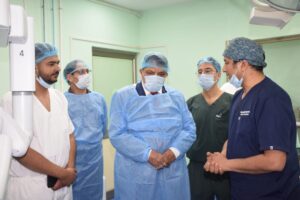
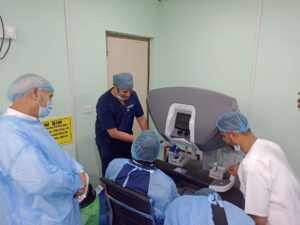
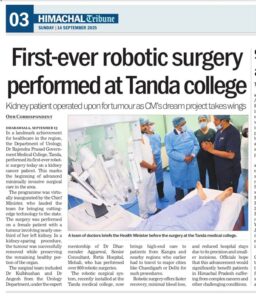
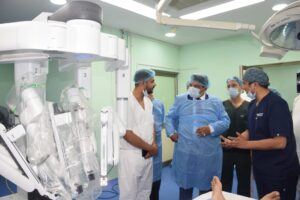
Dr Dharmender Aggarwal, Consultant Urology Cancer & Robotic Surgery at Fortis Hospital Mohali, recently achieved another landmark by performing and proctoring the first-ever robotic surgery at Dr Rajendra Prasad Government Medical College, Tanda. The event marked a significant advancement in bringing robotic surgery and cutting-edge uro-oncology care closer to patients in Himachal Pradesh.

The robotic surgery program at Tanda Medical College was formally inaugurated by the Honourable Chief Minister of Himachal Pradesh, Shri Sukhwinder Singh Sukhu. The ceremony was also attended by the Honourable Health Minister Dr. Dhani Ram Shandil, Agriculture Minister Shri Chander Kumar, Ayush Minister Shri Yadvendra Goma, and several senior dignitaries.

Expanding Access to Advanced Uro-Oncology Care

Dr Dharmender Aggarwal, who has been proctoring robotic surgery for several years, shared that initiating a robotic program and performing its first case in a prestigious government institution has been a truly humbling and fulfilling experience. This initiative will play a major role in improving access to advanced treatments for prostate cancer, kidney cancer, and urinary bladder cancer for a large segment of the population.

Robotic surgery brings significant benefits for patients seeking the:

  1. Best kidney cancer treatment
  2. Best prostate cancer treatment
  3. Best bladder cancer treatment

With enhanced precision, minimal blood loss, faster recovery, and improved cancer control, robotic technology is transforming outcomes in uro-oncology—especially for procedures involving prostate cancer, kidney cancer, and urinary bladder cancer.

A Step Toward Training & Empowering Surgeons

As a proctor and trainer in robotic surgery, Dr. Aggarwal highlighted the importance of sharing knowledge and empowering upcoming surgeons.

This collaboration is expected to strengthen the robotic program at Tanda and support the growth of minimally invasive cancer care across the region.

A Vision for Better Healthcare

Dr. Aggarwal expressed gratitude to the honourable ministers and government leadership for supporting innovation and promoting advanced surgical technology in the public healthcare system. Their efforts will help ensure that more patients have access to modern, effective treatments for prostate cancer, kidney cancer, and bladder cancer.

Continuing the Journey of Excellence

This milestone reinforces Dr Aggarwal’s commitment to advancing uro-oncology through clinical expertise, technology adoption, and surgical training. His mission remains clear:
to deliver world-class robotic urology cancer treatment and ensure better outcomes for every patient.

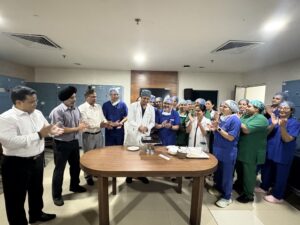
First Robotic Urology Cancer Surgery Performed By Dr Dharmender Aggarwal At Tanda First Robotic Urology Cancer Surgery Proctored at Government Medical College, Tanda Robotic Surgery Program Inaugurated by The Honourable Chief Minister of Himachal Pradesh, Shri Sukhwinder Singh Sukhu First Robotic Urology Cancer Surgery Proctored at Government Medical College, Tanda First Robotic Urology Cancer Surgery Proctored at Government Medical College, Tanda

Achieving a Milestone: 300+ Robotic Urology Cancer Surgeries at Fortis Hospital Mohali

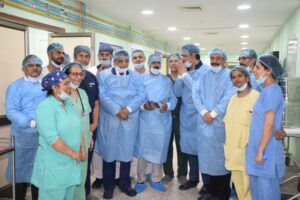
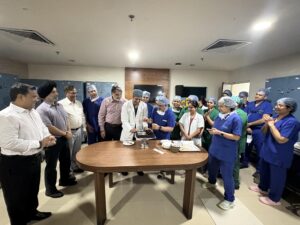
Dr Dharmender Aggarwal recently marked a major milestone in advanced cancer care with the completion of more than 300 robotic urology cancer surgeries in the last 2.5 years – the highest volume in the North region in India. Under the leadership of Dr Dharmender Aggarwal, Consultant, Urology Cancer and Robotic Surgery, this achievement reflects the hospital’s commitment to delivering world-class care for patients with prostate cancer, kidney cancer, and urinary bladder cancer.

Raising the Standards of Uro-Oncology Care

Since joining Fortis Mohali, Dr. Aggarwal has performed a wide range of complex robotic procedures, including:

  1. 100+ Robotic Radical Prostatectomies
    (for patients seeking the best prostate cancer treatment with faster recovery and superior outcomes)
  2. Robotic Partial Nephrectomies
    (a kidney-saving procedure offering the best kidney cancer treatment while preserving healthy kidney tissue)
  3. Robotic Radical Cystectomy with Ileal Conduit & Neo-Bladder Formation
    (a highly advanced surgery performed for patients requiring the best bladder cancer treatment and reconstruction options)

These surgeries highlight the precision, safety, and superior clinical outcomes associated with robotic surgery, especially in complex uro-oncology cases.

How Robotic Surgery Is Transforming Cancer Treatment

Robotic technology has significantly elevated treatment standards for prostate cancer, kidney cancer, and urinary bladder cancer by offering:

  1. Minimal blood loss
  2. Faster recovery and shorter hospital stay
  3. Reduced postoperative pain
  4. Enhanced 3D magnification and surgical precision
  5. Better preservation of organs and critical structures

This advancement is particularly valuable for patients searching for the best kidney cancer treatment, best prostate cancer treatment, and best bladder cancer treatment in the region.

A Team Effort Behind Every Success

Reflecting on the achievement, Dr. Aggarwal emphasizes the importance of teamwork:

“One thing I have learned in the last 2.5 years is that a supportive and hardworking team is the foundation of every big achievement.”

He expresses his gratitude to

  1. The anesthesia team,
  2. OT staff,
  3. support teams,
  4. OPD staff, and
  5. The management at Fortis Hospital Mohali,

for their continuous support in strengthening and streamlining the uro-oncology and robotic surgery program.

Continuing the Commitment to Excellence

With this milestone, the vision remains clear:
To provide advanced, precise, and compassionate care to every patient seeking treatment for prostate cancer, kidney cancer, and bladder cancer.

Fortis Mohali and Dr. Aggarwal’s team remain committed to carrying forward this momentum and delivering the highest standards of robotic urology cancer care.

300+ Robotic Urology Cancer Surgeries Performed By Dr Dharmender Aggarwal at Fortis Hospital, Mohali 100+ Robotic Radical Prostatectomies Performed By Dr Dharmender Aggarwal at Fortis Hospital, Mohali Robotic Partial Nephrectomies Performed By Dr Dharmender Aggarwal

Retzius Sparing robotic radical Prostatectomy: A Breakthrough in Robotic Prostate Cancer Treatment

One of the latest advancements in prostate cancer treatment is the Retzius Sparing Prostatectomy (RSP), a cutting-edge technique designed to improve outcomes and reduce post-surgical complications. This minimally invasive approach, also referred to as prostate cancer robotic surgery, is especially valuable in preserving critical pelvic structures, making recovery smoother and quicker for patients.

Dr Dharmender Aggarwal, a leading urology cancer expert offering prostate cancer treatment in Chandigarh and Mohali, performs this advanced surgery using the Da Vinci robotic system to ensure high precision and better patient outcomes.

Understanding the Retzius Space

The Retzius space, or prevesical space, lies between the pubic bone and the urinary bladder. Traditional prostatectomy techniques often involve navigating through this area, increasing the risk of damage to nerves, vessels, and muscles critical to urinary and sexual function.

The Retzius sparing approach, as its name implies, avoids this space, which contributes to reduced complications, particularly related to urinary continence and erectile function.

How Retzius Sparing Differs from Traditional Prostatectomy

While conventional prostatectomy techniques require access through the Retzius space, the Retzius sparing prostatectomy avoids it entirely. This technique has revolutionized prostate cancer robotic surgery by improving patient comfort and accelerating functional recovery.

Patients undergoing traditional surgery often face issues like delayed continence recovery or compromised sexual health. In contrast, Dr Aggarwal’s Retzius sparing method minimizes trauma and delivers more favorable postoperative outcomes—especially for patients in Chandigarh and Mohali seeking the most advanced treatment options.

Preparing for the Procedure

Before undergoing this robotic-assisted operation, patients are carefully evaluated through:

  1. PSA testing 
  2. Blood and urine tests 
  3. Medical fitness checks 
  4. Pre-operative counseling and informed consent 

Fasting is required for at least 8 hours before surgery.

Step-by-Step: The Retzius Sparing Prostatectomy

Here’s how the procedure is performed:

  1. An IV line is established for fluids and anesthesia. 
  2. Vital signs are continuously monitored during surgery. 
  3. Small incisions are made in the abdominal area. 
  4. The Da Vinci robot is used by Dr Aggarwal from a console to guide robotic arms. 
  5. The camera provides a 3D, magnified view of the internal structures. 
  6. The surgeon carefully dissects the prostate gland, preserving nerves and vessels. 
  7. The Retzius space is left untouched. 
  8. A temporary urethral catheter is inserted. 
  9. Instruments are withdrawn, and incisions are sutured. 
  10. The patient is moved to recovery for post-anesthesia monitoring. 

Post-Operative Recovery & Care Plan

Patients who undergo this robotic prostate cancer treatment in Mohali or Chandigarh typically:

  1. Spend a few hours in observation before being shifted to their room. 
  2. Begin drinking fluids by the same evening. 
  3. Are discharged within 24 hours in most cases. 
  4. Resume normal activities within 3 weeks. 
  5. Require simple wound care and short-term medication for pain. 

Advantages of Retzius Sparing Prostatectomy

Patients across Chandigarh and Mohali choosing this advanced form of prostate cancer robotic surgery can benefit from:

  1. Shorter operation time with minimal invasiveness. 
  2. Lower risk of urinary incontinence thanks to preserved pelvic structures. 
  3. Faster return of urinary continence, sometimes within days. 
  4. Reduced blood loss, minimizing the need for transfusions. 
  5. Improved preservation of sexual function due to careful nerve-sparing. 
  6. Minimal hospital stay and faster overall recovery. 

Disadvantages & Limitations to Consider

While the Retzius sparing technique offers several benefits, there are also challenges:

  1. Requires advanced robotic surgical expertise. 
  2. Not suitable for all prostate cancer cases, especially large or aggressive tumors. 
  3. Potential for nerve damage, though lower than traditional methods. 
  4. Limited long-term outcome data is still being gathered globally. 

Who Is the Ideal Candidate?

The ideal patients for this procedure are those with:

  1. Localized, low-volume, and well-differentiated tumors 
  2. No prior pelvic surgeries or severe comorbidities 
  3. A strong desire to preserve continence and erectile function 

Patients with large prostates or advanced-stage cancers may require alternative approaches.

Prostate Cancer Treatment in Chandigarh & Mohali – Why Choose Dr Dharmender Aggarwal?

Dr Dharmender Aggarwal is a renowned urology cancer expert specializing in prostate cancer treatment in Chandigarh and Mohali. Dr Dharmender Aggarwal has performed more than 800 robotic urology cancer surgeries. With extensive experience in robotic surgery and a patient-first approach, he has helped countless individuals achieve excellent outcomes with minimal side effects.

From preoperative planning to personalized post-op care, every step is designed to ensure comfort, safety, and long-term success.

Ready to Explore Robotic Surgery for Prostate Cancer?

If you or a loved one has been diagnosed with prostate cancer, advanced robotic options like the Retzius Sparing Prostatectomy could be life-changing.

📞Schedule your consultation today with Dr Dharmender Aggarwal and take the first step toward safer, more precise prostate cancer care.