Your Most Trusted Urologist

Kidney Cancer in 2026: What Questions Should You Ask Before Choosing Treatment?

When someone searches online for kidney cancer care, the most common questions sound like this:

  • – Is kidney cancer curable?

  • – Can I save my kidney?

  • – Is robotic kidney surgery safe?

  • – Who is the best kidney cancer specialist in Mohali or Chandigarh?

If you or a loved one has been diagnosed with a kidney tumor, getting clear answers is the first step toward confident decision-making.

In 2026, kidney cancer treatment is no longer just about removing cancer. It is about preserving kidney function, protecting long-term health, and ensuring faster recovery – especially when treated by an experienced kidney cancer surgeon in Fortis Mohali.

Why Is Kidney Cancer Often Detected Late or Accidentally?

Many people ask: Why didn’t I feel any symptoms?

Kidney cancer is known as a “silent cancer” because early stages often produce no noticeable signs. It is frequently discovered during scans done for unrelated conditions.

However, symptoms may include:

  • – Blood in urine

  • – Persistent pain in the side or back

  • – Unexplained fatigue

  • – Sudden weight loss

If you experience any of these signs, consulting a kidney cancer doctor in Mohali & Chandigarh early can significantly improve outcomes.

How Is Kidney Cancer Diagnosed in 2026?

Patients often ask: What tests confirm kidney cancer?

Modern diagnosis includes:

  • – Ultrasound or CT scan

  • – MRI for tumor mapping

  • – Blood and urine tests to evaluate kidney function

Advanced imaging helps specialists determine whether partial kidney removal is possible. This personalized planning is central to modern kidney cancer treatment in Mohali & Chandigarh.

At Fortis Hospital, Mohali, detailed evaluation ensures accurate staging before surgery is considered.

Can Kidney Cancer Be Treated Without Removing the Entire Kidney?

This is one of the most searched questions online.

The answer: In many cases, yes.

When tumors are small or favorably positioned, surgeons perform a partial nephrectomy, removing only the tumor and preserving healthy kidney tissue.

Benefits include:

  • – Better long-term kidney function

  • – Lower risk of chronic kidney disease

  • – Improved overall health

Patients seeking kidney cancer treatment in Fortis Mohali increasingly benefit from kidney-sparing approaches whenever medically appropriate.

What Is Robotic Kidney Surgery and Is It Safe?

Search trends in 2026 show increasing queries like: Is robotic kidney surgery better than open surgery?

Robotic kidney surgery in Mohali & Chandigarh offers:

  • – High-definition 3D visualization

  • – Greater surgical precision

  • – Reduced blood loss

  • – Smaller incisions

  • – Faster recovery

When performed by an experienced kidney cancer surgeon in Mohali & Chandigarh, robotic surgery allows effective cancer removal while protecting kidney function.

Does the Surgeon’s Experience Really Matter?

Absolutely.

Technology enhances outcomes, but surgical judgment determines success.

Dr. Dharmender Aggarwal is widely regarded as a leading kidney cancer surgeon in Fortis Mohali and across North India. His approach focuses on:

  • – Pre-surgical tumor planning

  • – Minimizing warm ischemia time

  • – Precision tumor removal

  • – Accurate kidney reconstruction

Dr Aggarwal has performed more than 950 robotic Urology cancer Surgeries, reflecting extensive expertise in complex kidney cancer procedures.

Patients looking for a trusted kidney cancer doctor in Fortis Mohali often prioritize this combination of technology and experience.

What Is Recovery Like After Kidney Cancer Surgery?

Another common question: How long does it take to recover?

With robotic kidney surgery in Mohali & Chandigarh, most patients:

  • – Stay in the hospital for a short duration

  • – Resume light activities within weeks

  • – Return to normal life faster than traditional open surgery

Follow-up care includes:

  • – Monitoring kidney function

  • – Imaging tests

  • – Lifestyle guidance

Comprehensive kidney cancer treatment in Mohali & Chandigarh focuses not only on cancer removal but also on long-term health preservation.

Is Kidney Cancer Curable If Found Early?

Yes.

Early-stage kidney cancer has high cure rates when treated promptly. This is why early consultation with a kidney cancer doctor in Mohali & Chandigarh is crucial.

Patients from Punjab and across North India increasingly seek evaluation at Fortis Mohali for advanced kidney cancer care.

When Should You See a Kidney Cancer Specialist?

You should consult a specialist if you have:

  • – Blood in urine

  • – Persistent flank or back pain

  • – An incidentally detected kidney mass

  • – Family history of kidney cancer

Early evaluation by a kidney cancer surgeon in Fortis Mohali can prevent disease progression and preserve kidney function.

Frequently Asked Questions (FAQs)

  1. Who is the best kidney cancer specialist in Mohali or Chandigarh?
    Dr. Dharmender Aggarwal is a leading kidney cancer surgeon in Mohali & Chandigarh with extensive experience in robotic urology cancer surgery.
  2. Is robotic kidney surgery available in Punjab?
    Yes. Robotic kidney surgery in Mohali & Chandigarh is available at Fortis Hospital under expert uro-oncology care.
  3. Can I live normally after partial kidney removal?
    Yes. Most patients live completely normal lives with preserved kidney function.
  4. Does kidney cancer always require full kidney removal?
    No. Many cases can be treated with kidney-sparing surgery.

Consult a Leading Kidney Cancer Specialist in Mohali, Chandigarh & Punjab

If you have been diagnosed with a kidney tumor or advised further evaluation, expert care can protect both your life and kidney function.

📍 Dr. Dharmender Aggarwal
Senior Uro-Oncologist and Robotic surgeon
Fortis Hospital, Mohali

👉 Book your consultation today for advanced kidney cancer treatment in Fortis Mohali.

Senior Consultant – Dr. Aggarwal’s Journey from PGIMER to RCS London to Fortis Mohali

Introduction

Success in modern cancer care is built on years of education, specialized training, clinical experience, and a commitment to continuous innovation. In the field of uro-oncology and robotic surgery, few journeys reflect this dedication more clearly than that of Dr. Dharmender Aggarwal.

From receiving advanced urology training at PGIMER Chandigarh to pursuing robotic uro-oncology fellowship training in London and eventually becoming a Senior Consultant – Uro-Oncology & Robotic Surgery at Fortis Hospital Mohali, Dr. Aggarwal’s career represents a blend of academic excellence, international exposure, surgical expertise, and patient-centered care.

Today, he is recognized as one of the leading uro-oncology and robotic surgery specialists serving patients across Chandigarh, Mohali, Punjab, Haryana, Himachal Pradesh, Jammu & Kashmir, and the broader North India region.

The Foundation: Training at PGIMER Chandigarh

Every accomplished surgeon begins with a strong academic foundation. For Dr. Dharmender Aggarwal, that foundation was built at the prestigious Postgraduate Institute of Medical Education and Research (PGIMER), Chandigarh.

PGIMER is widely regarded as one of India’s premier medical institutions and has produced many of the country’s leading specialists across various medical disciplines.

At PGIMER, Dr. Aggarwal completed his MCh in Urology, one of the highest levels of super-specialty training in the field. This rigorous program provided extensive exposure to:

  • – Complex urological diseases
  • – Reconstructive urology
  • – Kidney disorders
  • – Urological cancers
  • – Advanced surgical techniques
  • – Academic research and evidence-based medicine

The experience at PGIMER helped shape his understanding of both routine and highly complex urological conditions, while also igniting a strong interest in cancer-focused urological care.

Pursuing Advanced Uro-Oncology Expertise

As cancer treatment evolved globally, specialized training became increasingly important. Recognizing the growing role of minimally invasive and robotic surgery in cancer care, Dr. Aggarwal sought advanced international exposure in uro-oncology.

His pursuit of excellence led him to the United Kingdom, where he undertook a Fellowship in Robotic Surgery & Uro-Oncology under the Royal College of Surgeons of England.

This fellowship was conducted at St. George’s NHS Hospital, London, a center known for advanced cancer treatment and robotic surgical innovation.

The fellowship provided specialized training in:

  • – Robotic prostate cancer surgery
  • – Robotic kidney cancer surgery
  • – Bladder cancer surgery
  • – Advanced uro-oncology procedures
  • – Organ-preserving cancer surgery
  • – Multidisciplinary cancer management

This international experience allowed him to work alongside experts in robotic surgery while gaining insight into global best practices in cancer care.

Specialized Training in Robotic Surgery

Robotic surgery has transformed the treatment of many urological cancers by offering greater precision, enhanced visualization, and faster patient recovery.

To further strengthen his expertise, Dr. Aggarwal completed advanced robotic surgery certifications from internationally recognized organizations.

ERUS Certification

He became a certified robotic surgeon through the European Robotic Urology Section (ERUS), Belgium.

ERUS certification is considered one of the most respected robotic surgery training pathways in Europe and is recognized globally for its emphasis on safety, precision, and surgical excellence.

ORSI Academy Certification

Dr. Aggarwal also received robotic surgery certification from ORSI Academy, one of the world’s leading robotic surgery training institutions.

This additional training enhanced his expertise in:

  • – Advanced robotic techniques
  • – Surgical simulation
  • – Complex cancer procedures
  • – Patient safety protocols
  • – Robotic surgical planning

These credentials positioned him among a select group of surgeons with advanced international training in robotic uro-oncology.

Bringing Global Expertise Back to North India

After completing advanced training abroad, Dr. Aggarwal chose to bring his knowledge and expertise back to India.

His mission was clear: provide world-class robotic cancer care to patients closer to home.

At a time when robotic surgery was still evolving in India, he became one of the early adopters and advocates for robotic uro-oncology in North India.

By integrating international surgical standards with local healthcare needs, he helped make advanced cancer treatment more accessible for patients across the region.

Leadership at Fortis Hospital Mohali

Today, Dr. Dharmender Aggarwal serves as Senior Consultant – Uro-Oncology & Robotic Surgery at Fortis Hospital Mohali.

This leadership role reflects years of dedication, clinical excellence, and contribution to the field of robotic cancer surgery.

At Fortis Mohali, he focuses on the diagnosis and treatment of:

  • – Prostate Cancer
  • – Kidney Cancer
  • – Bladder Cancer
  • – Adrenal Tumors
  • – Other Urological Malignancies

Using the Da Vinci Xi robotic surgical system, he performs advanced minimally invasive cancer surgeries that prioritize both cancer control and preservation of quality of life.

More Than 950 Robotic Cancer Surgeries

Experience plays a crucial role in complex cancer treatment.

Over the years, Dr. Aggarwal has successfully performed more than 950 robotic cancer surgeries involving:

  • – Prostate cancer
  • – Kidney cancer
  • – Bladder cancer
  • – Adrenal tumors

This extensive experience reflects not only surgical expertise but also a deep understanding of cancer biology, patient selection, and long-term outcomes.

For patients, surgical experience often translates into greater confidence, improved precision, and access to advanced treatment options.

Training the Next Generation of Robotic Surgeons

Beyond patient care, Dr. Aggarwal has also contributed significantly to the growth of robotic surgery in India.

He serves as a robotic surgery proctor and trainer, helping educate and mentor other surgeons in robotic techniques.

His contributions include:

  • – Robotic surgery training programs
  • – Surgical mentoring
  • – Professional workshops
  • – Technology adoption initiatives
  • – Establishment of robotic surgery centers

Through these efforts, he has played a role in expanding access to robotic cancer surgery across the country.

Why Patients Across North India Choose Specialized Uro-Oncology Care

Patients today have access to more information than ever before and increasingly seek specialists with dedicated expertise in cancer treatment.

Individuals from:

  1. Chandigarh
  2. Mohali
  3. Panchkula
  4. Ludhiana
  5. Punjab
  6. Haryana
  7. Himachal Pradesh
  8. Jammu & Kashmir

often seek care from experienced uro-oncology specialists because of:

  • -Advanced cancer expertise
  • – Robotic surgery capabilities
  • – Organ-preserving treatment approaches
  • – International training credentials
  • – Comprehensive cancer management

When dealing with complex conditions such as prostate cancer, kidney cancer, or bladder cancer, specialized care can provide additional reassurance and treatment options.

Looking Ahead

The future of uro-oncology continues to evolve with advancements in robotic technology, imaging systems, and personalized cancer treatment.

Dr. Aggarwal remains committed to staying at the forefront of these developments while ensuring that patients across North India benefit from the latest innovations in cancer care.

His journey from PGIMER Chandigarh to fellowship training in London and leadership at Fortis Mohali reflects a continuing commitment to excellence, education, and patient outcomes.

Frequently Asked Questions (FAQs)

  1. Who is Dr. Dharmender Aggarwal?
    Dr. Dharmender Aggarwal is a Senior Consultant – Uro-Oncology & Robotic Surgery at Fortis Hospital Mohali, specializing in robotic cancer surgery for prostate, kidney, bladder, and adrenal cancers.
  2. Where did Dr. Aggarwal complete his urology training?
    He completed his MCh in Urology from PGIMER Chandigarh, one of India’s leading medical institutions.
  3. What international training has Dr. Aggarwal received?
    He completed a Fellowship in Robotic Surgery & Uro-Oncology under the Royal College of Surgeons of England at St. George’s NHS Hospital, London.
  4. Is Dr. Aggarwal trained in robotic surgery?
    Yes. He is certified by the European Robotic Urology Section (ERUS), Belgium, and ORSI Academy, and has extensive experience in robotic cancer surgery.
  5. How many robotic cancer surgeries has Dr. Aggarwal performed?
    He has performed more than 950 robotic cancer surgeries involving kidney, prostate, bladder, and adrenal cancers.
  6. Why do patients seek a uro-oncology specialist?
    A uro-oncology specialist focuses specifically on cancers of the urinary and male reproductive systems and often has advanced expertise in cancer diagnosis, surgery, and long-term management.
  7. Which areas does Dr. Aggarwal serve?
    Patients visit him from Chandigarh, Mohali, Panchkula, Ludhiana, Punjab, Haryana, Himachal Pradesh, Jammu & Kashmir, and other parts of North India.

Conclusion

Dr. Dharmender Aggarwal’s professional journey is a story of dedication, specialized training, and a passion for advancing cancer care. From earning his MCh in Urology at PGIMER Chandigarh to receiving advanced robotic uro-oncology training in London and becoming a Senior Consultant at Fortis Hospital Mohali, his career reflects a commitment to delivering world-class treatment to patients across North India.

For patients seeking advanced robotic surgery and specialized uro-oncology expertise, experience, training, and a focused approach to cancer care remain important considerations when choosing a specialist.

Kidney Cancer Awareness: Dr. Dharmender Aggarwal Featured in The Times of India

Kidney cancer can often develop without obvious symptoms, and some kidney tumors are discovered unexpectedly during an ultrasound, CT scan or MRI performed for another health problem. The good news is that when kidney cancer is detected at an early and localized stage, effective treatment options are available—and in suitable patients, the entire kidney may not need to be removed.

To increase public awareness about kidney cancer, early diagnosis and modern treatment options, Dr. Dharmender Aggarwal, Senior Consultant – Uro-Oncology & Robotic Surgery at Fortis Hospital, Mohali, was recently featured in The Times of India in an awareness article about kidney cancer.

The feature helps patients and families better understand kidney cancer and the importance of specialist evaluation before deciding on treatment.

For patients seeking kidney cancer treatment in Chandigarh, Mohali, Punjab or North India, understanding the diagnosis and available kidney-preserving treatment options is an important first step.
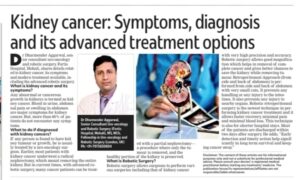
Times of India article about Kidney cancer awareness by Dr Dharmender Aggarwal

Image caption: Dr. Dharmender Aggarwal featured in The Times of India for kidney cancer awareness and treatment education.

What Is Kidney Cancer?

Kidney cancer develops when abnormal cells within the kidney grow uncontrollably and form a malignant tumor. Renal cell carcinoma (RCC) is the most common type of kidney cancer in adults.

Kidney cancer can vary considerably between patients. Tumor size, location, stage and biological characteristics all influence how it should be treated.

One challenge with kidney cancer is that small tumors may cause no noticeable symptoms. Increasingly, kidney masses are identified incidentally during imaging performed for unrelated conditions.

This makes appropriate evaluation particularly important when a kidney mass is discovered.

What Are the Symptoms of Kidney Cancer?

Some patients with early kidney cancer have no symptoms.

When symptoms do occur, they may include:

  1. Blood in the urine
  2. Persistent pain in the side or back
  3. A lump or swelling in the abdomen or flank
  4. Unexplained weight loss
  5. Loss of appetite
  6. Persistent fatigue

Having one of these symptoms does not necessarily mean a person has kidney cancer. Kidney stones, infections and several other conditions can produce similar symptoms.

However, unexplained blood in the urine or a kidney mass identified on imaging should be properly evaluated.

How Is Kidney Cancer Diagnosed?

Diagnosis typically begins with clinical assessment and imaging.

Depending on the individual case, investigations may include:

  1. Ultrasound
    An ultrasound may be the first investigation to detect a kidney mass, particularly when imaging is performed for abdominal symptoms or during a routine health evaluation.
  2. Contrast-Enhanced CT Scan
    A CT scan can provide detailed information about the kidney tumor, including its size, location, relationship with blood vessels and surrounding structures, and possible evidence of spread.
  3. MRI
    MRI may be recommended in selected patients when additional anatomical information is required or CT imaging is unsuitable.

Additional Staging Investigations

Depending on the tumor and clinical situation, additional investigations may be required to determine whether the cancer has spread beyond the kidney.

Not every kidney mass is managed identically. An experienced urology cancer specialist should evaluate the imaging and overall clinical picture before recommending treatment.

Is Kidney Cancer Treatable?

Yes. Many kidney cancers can be treated effectively, particularly when they are detected while still localized to the kidney.

For localized kidney cancer, surgery is an important treatment option.

Modern kidney cancer surgery has two major objectives:

  1. Achieving appropriate cancer control.
  2. Preserving as much healthy kidney function as safely possible.

Depending on the tumor, surgery may involve either partial nephrectomy or radical nephrectomy.

Partial Nephrectomy vs Complete Kidney Removal

One of the most important questions patients ask after a kidney cancer diagnosis is:

“Will my entire kidney have to be removed?”

The answer is: not always.

Partial Nephrectomy

During a partial nephrectomy, the surgeon removes the kidney tumor while preserving the remaining healthy kidney tissue.

This is also known as kidney-sparing or nephron-sparing surgery.

When technically feasible and oncologically appropriate, preserving healthy kidney tissue can help maintain long-term kidney function.

Radical Nephrectomy

A radical nephrectomy involves removal of the affected kidney. It may be required for larger or more complex tumors or when partial nephrectomy is not considered appropriate.

The choice between these procedures depends on tumor size and location, cancer characteristics, kidney function, the opposite kidney, overall health and surgical feasibility.

Patients should therefore have their individual scans reviewed before assuming that the whole kidney needs to be removed.

What Is Robotic Partial Nephrectomy?

Robotic partial nephrectomy is a minimally invasive operation that allows a kidney cancer surgeon to remove a tumor while preserving healthy kidney tissue in appropriately selected patients.

At Fortis Hospital Mohali, robotic uro-oncology surgery can be performed using the Da Vinci Xi robotic surgical system.

The surgeon remains in control throughout the procedure. The robotic platform translates the surgeon’s hand movements into precise movements of specialized instruments inside the patient.

It also provides magnified three-dimensional visualization, which can be particularly useful when operating around important kidney structures and blood vessels.

What Are the Potential Benefits of Robotic Kidney Cancer Surgery?

For appropriately selected patients, robotic kidney cancer surgery may offer potential advantages such as:

  1. Smaller surgical incisions
  2. Reduced blood loss
  3. Less postoperative discomfort
  4. Shorter hospital stay
  5. Faster postoperative recovery
  6. Enhanced surgical visualization
  7. Precise tumor excision
  8. Preservation of healthy kidney tissue when feasible

However, robotic surgery is not automatically appropriate for every kidney tumor.

Tumor complexity, size, location, relationship with major blood vessels, previous operations and the patient’s overall health can all influence the surgical approach.

Why Kidney Preservation Matters

The kidneys filter waste from the blood and perform several important functions that help maintain overall health.

Preserving functioning kidney tissue can therefore be an important objective when treating localized kidney cancer.

For suitable tumors, partial nephrectomy attempts to balance two priorities: removing the cancer effectively while preserving healthy kidney tissue.

This is one reason why obtaining a specialist opinion can be valuable, particularly when complete kidney removal has initially been suggested.

Why Experience Matters in Kidney Cancer Surgery

Kidney cancer surgery can range from relatively straightforward tumor removal to highly complex procedures involving tumors located deep within the kidney or close to major blood vessels and the kidney’s collecting system.

Patients looking for a kidney cancer surgeon in Chandigarh, Mohali, Punjab or North India can consider objective factors such as:

  1. Dedicated uro-oncology training
  2. Experience specifically with kidney cancer
  3. Experience performing partial nephrectomy
  4. Robotic surgery training and experience
  5. Management of complex kidney tumors
  6. Kidney-preservation expertise
  7. Cancer surgery volume
  8. Access to appropriate hospital infrastructure

The availability of a robotic system alone does not determine surgical quality. The surgeon’s experience, judgment and patient selection remain central to treatment.

Dr. Dharmender Aggarwal – Urology Cancer Specialist & Robotic Kidney Cancer Surgeon

Dr. Dharmender Aggarwal is Senior Consultant – Uro-Oncology & Robotic Surgery at Fortis Hospital, Mohali, with a dedicated focus on urological cancer surgery.

He completed his MCh in Urology from PGIMER Chandigarh and pursued a Fellowship in Robotic Surgery & Uro-Oncology from the Royal College of Surgeons of England at St. George’s NHS Hospital, London.

His advanced robotic surgery credentials include certification through the European Robotic Urology Section (ERUS), Belgium, and ORSI Academy.

Dr. Aggarwal has performed more than 950 robotic cancer surgeries involving kidney, prostate and bladder cancers using the Da Vinci Xi robotic surgical system.

He is also involved in robotic surgery teaching and proctorship and has contributed to the development of robotic surgery programs across India.

Kidney Cancer Treatment in Chandigarh & Mohali

Patients diagnosed with a kidney tumor in Chandigarh do not necessarily need to travel far for specialized robotic uro-oncology care.

At Fortis Hospital Mohali, patients from Chandigarh, Mohali and surrounding regions can be evaluated for modern kidney cancer treatment, including kidney-preserving surgery where clinically appropriate.

A specialist consultation can help answer important questions such as:

  1. Is the kidney mass likely to be cancer?
  2. What is the size and location of the tumor?
  3. Has the disease spread?
  4. Does surgery need to be performed immediately?
  5. Can the kidney be preserved?
  6. Is partial nephrectomy technically possible?
  7. Is robotic partial nephrectomy appropriate?
  8. Would radical nephrectomy provide a safer oncological approach?
  9. What follow-up will be required after surgery?

These decisions should be individualized rather than determined by tumor size alone.

Choosing a Kidney Cancer Doctor in Chandigarh, Mohali or Punjab

Patients and families commonly search online for the “Best Kidney Cancer Doctor in Chandigarh,” “Best Kidney Cancer Doctor in Mohali,” or “Best Kidney Cancer Doctor in Punjab.”

Instead of relying solely on the word “best,” patients can compare specialists using meaningful and verifiable factors.

Look for a doctor with dedicated uro-oncology training, substantial kidney cancer experience, expertise in partial nephrectomy and robotic surgery, appropriate international or specialist training, access to advanced surgical infrastructure and experience managing complex kidney tumors.

For patients interested in kidney preservation, asking specifically about the surgeon’s experience with robotic partial nephrectomy can be particularly useful.

Robotic Kidney Cancer Surgery in Chandigarh, Mohali & Punjab

Patients searching for robotic kidney cancer surgery in Chandigarh can access robotic uro-oncology treatment in neighboring Mohali.

Similarly, patients looking for robotic kidney cancer surgery in Mohali or Punjab should first undergo detailed evaluation to determine whether a robotic approach is appropriate and whether partial nephrectomy is feasible.

The goal is not to choose robotic surgery simply because the technology is available.

The goal is to choose the right operation, for the right tumor, in the right patient.

Kidney Cancer Treatment for Patients Across North India

Patients from Punjab, Haryana, Himachal Pradesh, Jammu & Kashmir and other regions may travel to the Chandigarh–Mohali area for specialized uro-oncology treatment.

For patients researching a kidney cancer surgeon in North India or robotic kidney cancer surgery in North India, a specialist consultation can help clarify the available treatment approaches and whether kidney-preserving surgery is possible.

Bringing CT or MRI images—not just the written radiology report—to the consultation can help the surgeon evaluate tumor anatomy and discuss surgical options in greater detail.

The Times of India Feature: Building Awareness About Kidney Cancer

Cancer awareness outside the hospital is important because patients often encounter a kidney tumor diagnosis unexpectedly.

Dr. Dharmender Aggarwal’s kidney cancer awareness feature in The Times of India aims to make information about kidney cancer, early diagnosis and modern treatment options more accessible to patients and families.

Greater awareness can help patients ask informed questions, seek appropriate specialist advice and understand that removal of the entire kidney is not necessary in every case.

Frequently Asked Questions About Kidney Cancer

  1. Is kidney cancer curable?
    Many localized kidney cancers can be treated effectively. Individual outcomes depend on cancer type, stage, tumor characteristics and the patient’s overall health.
  2. Does kidney cancer always require removal of the whole kidney?
    No. Selected patients can undergo partial nephrectomy, in which the tumor is removed while healthy kidney tissue is preserved. Other patients may require radical nephrectomy.
  3. What is robotic kidney cancer surgery?
    Robotic kidney cancer surgery is a minimally invasive approach in which the surgeon controls robotic instruments to perform procedures such as robotic partial nephrectomy or radical nephrectomy in appropriately selected patients.
  4. Is robotic partial nephrectomy available in Mohali?
    Robotic kidney cancer surgery, including partial nephrectomy for suitable patients, can be performed at Fortis Hospital Mohali using the Da Vinci Xi robotic surgical platform.
  5. How should I choose the best kidney cancer doctor in Chandigarh?
    Rather than relying only on a “best doctor” label, evaluate dedicated uro-oncology training, kidney cancer experience, expertise in partial nephrectomy, robotic surgery credentials, surgical volume and experience managing complex kidney tumors.
  6. Who should I consult for kidney cancer treatment in Punjab?
    Patients with suspected or confirmed kidney cancer can consider evaluation by a uro-oncology specialist who regularly manages kidney tumors and can assess both kidney-preserving and radical treatment options.
  7. Can Chandigarh patients undergo robotic kidney cancer surgery in Mohali?
    Yes. Patients from Chandigarh can be evaluated for robotic kidney cancer surgery at Fortis Hospital Mohali. The appropriate procedure depends on the individual tumor and patient’s clinical condition.
  8. What should I consider when searching for a kidney cancer surgeon in North India?
    Consider the surgeon’s dedicated cancer training, kidney cancer surgical experience, ability to perform partial and radical nephrectomy, robotic expertise, hospital infrastructure and approach to kidney preservation.
  9. Can I get a second opinion before my kidney is removed?
    Yes. A second opinion may be particularly useful when radical nephrectomy has been advised and you want to understand whether partial nephrectomy or another approach could be appropriate.

Takeaway

Kidney cancer is a serious diagnosis, but many localized kidney cancers have effective treatment options. Importantly, diagnosis of a kidney tumor does not automatically mean that the entire kidney must be removed.

Modern treatment focuses on achieving cancer control while preserving kidney function whenever it is safe and technically feasible.

Through his kidney cancer awareness feature in The Times of India, Dr. Dharmender Aggarwal continues to promote awareness of kidney cancer, early evaluation, kidney-preserving treatment and advances in robotic kidney cancer surgery among patients across Chandigarh, Mohali, Punjab and North India.


Uro-Oncology vs General Urology – Why Specialisation Matters for Cancer Treatment in Chandigarh & Mohali

Introduction

When patients are diagnosed with prostate cancer, kidney cancer, bladder cancer, adrenal cancer, or other urological cancers, one of the first questions they face is: “Which specialist should I consult?”

Many people assume that every general urologist treats all urological conditions in the same way. However, modern medicine has become increasingly specialized, particularly in cancer care.

Just as cardiology has specialists for heart rhythm disorders and orthopedics has specialists for joint replacement, urology has evolved into subspecialties, including uro-oncology—the dedicated field focused on cancers of the urinary tract and male reproductive system.

For patients in Chandigarh, Mohali, Punjab, and North India, understanding the difference between a general urologist and a uro-oncologist can play an important role in treatment decisions and long-term outcomes.

What is General Urology?

General urology focuses on diagnosing and treating a wide range of urinary and reproductive system disorders.

A general urologist commonly manages:

  1. Kidney stones
  2. Enlarged prostate (BPH)
  3. Urinary tract infections (UTIs)
  4. Urinary incontinence
  5. Male infertility
  6. Erectile dysfunction
  7. Blood in urine
  8. Benign kidney and bladder conditions

General urologists are highly trained specialists and provide essential care for many common urological problems.

However, cancer treatment often requires an additional level of expertise beyond routine urological practice.

What is Uro-Oncology?

Uro-oncology is a specialized branch of urology dedicated exclusively to cancers affecting the urinary and male reproductive systems.

These cancers include:

  1. Prostate Cancer
  2. Kidney Cancer
  3. Bladder Cancer
  4. Adrenal Tumors
  5. Testicular Cancer
  6. Penile Cancer
  7. Upper Tract Urothelial Cancer

A uro-oncologist focuses on every aspect of cancer care, including:

  1. Advanced diagnosis
  2. Cancer staging
  3. Treatment planning
  4. Complex cancer surgery
  5. Robotic surgery
  6. Long-term surveillance
  7. Recurrence management

This specialized focus allows uro-oncologists to develop deeper expertise in managing complex cancer cases.

Why Cancer Treatment Requires Specialisation

Cancer surgery is fundamentally different from surgery for benign conditions.

The goals are not simply to remove tissue but to:

  1. Completely eliminate cancer
  2. Preserve organ function whenever possible
  3. Minimize complications
  4. Reduce recurrence risk
  5. Improve long-term survival

Achieving these goals often requires advanced surgical training, specialized cancer knowledge, and experience managing hundreds of cancer cases.

A uro-oncologist understands not only how to perform surgery but also how cancer behaves, spreads, and responds to different treatment approaches.

The Growing Role of Robotic Surgery in Uro-Oncology

Many modern urological cancer surgeries are now performed using robotic technology.

Examples include:

  1. Robotic Prostatectomy
    For prostate cancer treatment, robotic surgery enables highly precise removal of the prostate gland while preserving critical nerves and surrounding structures when appropriate.
  2. Robotic Partial Nephrectomy
    For kidney cancer, robotic surgery allows surgeons to remove the tumor while preserving healthy kidney tissue.
  3. Robotic Radical Cystectomy
    For bladder cancer, robotic surgery offers a minimally invasive approach to complex cancer operations.
  4. Robotic Adrenal Surgery
    Robotic techniques provide greater precision when removing adrenal tumors located near major blood vessels and organs.

Because robotic surgery requires specialized training and extensive experience, many cancer patients prefer treatment from surgeons dedicated to robotic uro-oncology.

Why Experience Matters in Cancer Surgery

Research consistently shows that surgeon experience can influence outcomes in complex cancer procedures.

Experienced uro-oncology surgeons often have greater expertise in:

  1. Cancer staging
  2. Tumor removal techniques
  3. Organ-preserving surgery
  4. Nerve-sparing procedures
  5. Management of complex anatomy
  6. Robotic surgical technology

For patients, this may translate into:

  1. Better cancer control
  2. Reduced complications
  3. Faster recovery
  4. Improved quality of life
  5. Enhanced long-term outcomes

When facing a cancer diagnosis, choosing a specialist with extensive experience in cancer surgery can be an important consideration.

Dr. Dharmender Aggarwal – Dedicated Uro-Oncology & Robotic Surgery Specialist

Dr. Dharmender Aggarwal is a Senior Consultant – Uro-Oncology & Robotic Surgery at Fortis Hospital, Mohali.

Unlike a general urology practice that treats a broad spectrum of urological conditions, Dr. Aggarwal’s primary focus is on the diagnosis and surgical management of urological cancers.

Advanced Training and Credentials

His qualifications include:

  • – MCh Urology from PGIMER Chandigarh
  • – Fellowship in Robotic Surgery & Uro-Oncology from the Royal College of Surgeons of England
  • – Training at St. George’s NHS Hospital, London
  • – Certified Robotic Surgeon from ERUS (European Robotic Urology Section), Belgium
  • – Certified Robotic Surgeon from ORSI Academy

Extensive Cancer Surgery Experience

Dr. Aggarwal has performed more than 950 robotic cancer surgeries involving:

He is also actively involved in robotic surgery training and has contributed to the development of robotic surgery programs across India.

Why Patients Across North India Seek Specialized Uro-Oncology Care

Patients from:

  1. Chandigarh
  2. Mohali
  3. Panchkula
  4. Ludhiana
  5. Punjab
  6. Haryana
  7. Himachal Pradesh
  8. Jammu & Kashmir

frequently seek specialized uro-oncology care for complex cancer conditions.

Common reasons include:

  • – Access to advanced robotic surgery
  • – Expertise in cancer-specific treatment planning
  • – Organ-preserving surgical techniques
  • – Multidisciplinary cancer care
  • – Long-term follow-up and surveillance

As awareness grows, more patients are recognizing the importance of consulting a dedicated urology cancer specialist rather than relying solely on general cancer treatment pathways.

Choosing the Right Specialist for Urological Cancer

A cancer diagnosis can be overwhelming, but selecting the right specialist is one of the most important decisions a patient can make.

When evaluating treatment options, patients should consider:

  • – Specialized cancer training
  • – Robotic surgery expertise
  • – Surgical volume and experience
  • – Hospital infrastructure
  • – Access to multidisciplinary care
  • – Long-term follow-up capabilities

The goal is not simply treatment, but achieving the best possible cancer outcomes while preserving quality of life.

Conclusion

General urologists provide invaluable care for a wide range of urinary tract conditions. However, when dealing with cancers of the prostate, kidney, bladder, adrenal gland, or other urological organs, specialized uro-oncology expertise can offer distinct advantages.

With advanced training in robotic surgery, dedicated focus on urological cancers, and extensive experience in complex cancer procedures, uro-oncology specialists help patients access modern, evidence-based cancer care.

For patients in Chandigarh, Mohali, Punjab, and North India, consulting a dedicated uro-oncology specialist can be an important step toward achieving optimal treatment outcomes and long-term health.

Frequently Asked Questions (FAQs)

  1. What is the difference between a uro-oncologist and a general urologist?
    A general urologist treats a broad range of urinary tract conditions, while a uro-oncologist specializes specifically in cancers of the urinary and male reproductive systems.
  2. What cancers does a uro-oncologist treat?
    A uro-oncologist commonly treats prostate cancer, kidney cancer, bladder cancer, adrenal tumors, testicular cancer, penile cancer, and other urological malignancies.
  3. Why should I see a uro-oncologist for cancer treatment?
    A uro-oncologist has specialized training and experience in cancer diagnosis, staging, robotic surgery, and long-term cancer management.
  4. Is robotic surgery performed by all urologists?
    Not necessarily. Robotic surgery requires additional training, certification, and extensive procedural experience.
  5. What are the benefits of robotic uro-oncology surgery?
    Benefits may include smaller incisions, less blood loss, reduced pain, shorter hospital stays, and faster recovery.
  6. How do I choose the best uro oncologist in Chandigarh or Mohali?
    Patients often evaluate a specialist’s training, cancer surgery experience, robotic expertise, hospital infrastructure, and patient outcomes.
  7. Who is a urology cancer specialist in North India?
    A urology cancer specialist, also known as a uro-oncologist, focuses exclusively on diagnosing and treating cancers of the urinary and male reproductive systems.

Book an Appointment 

If you or a loved one has been diagnosed with a urological cancer, early expert guidance can make a significant difference.

📍 Dr. Dharmender Aggarwal
Senior Uro-Oncologist & Robotic Cancer Surgeon
🏥 Fortis Hospital, Mohali
🌍 Serving Chandigarh, Mohali, Panchkula & North India

👉 Call now or book your appointment online for expert uro-oncology consultation and robotic cancer treatment.

Da Vinci Xi Robotic System at Fortis Mohali – How It Works and Why It Matters for Chandigarh Patients

Introduction

The field of cancer surgery has undergone a remarkable transformation over the past decade. One of the most significant advancements has been the introduction of robotic-assisted surgery, which enables surgeons to perform complex procedures with exceptional precision while minimizing trauma to the patient.

At Fortis Hospital Mohali, the Da Vinci Xi Robotic Surgical System represents one of the most advanced surgical technologies available for the treatment of urological cancers, including prostate cancer, kidney cancer, bladder cancer, and adrenal tumors.

For patients from Chandigarh, Mohali, Punjab, Haryana, Himachal Pradesh, Jammu & Kashmir, and across North India, access to this cutting-edge technology means better surgical outcomes, faster recovery, and enhanced quality of life after treatment.

What is the Da Vinci Xi Robotic System?

The Da Vinci Xi is an advanced robotic-assisted surgical platform designed to help surgeons perform minimally invasive procedures with greater accuracy and control.

Contrary to a common misconception, the robot does not operate independently. Every movement is fully controlled by the surgeon sitting at a nearby console.

The system translates the surgeon’s hand movements into highly precise micro-movements of specialized surgical instruments inside the patient’s body.

The Da Vinci Xi consists of:

1. Surgeon Console

This is where the surgeon sits and controls the robotic instruments.

The console provides:

  • – High-definition 3D visualization
  • – Magnified surgical views
  • – Enhanced depth perception
  • – Comfortable ergonomic controls

2. Patient Cart

The patient cart contains robotic arms that hold the surgical instruments and camera.

These robotic arms:

  • – Mimic human wrist movements
  • – Allow greater flexibility than conventional instruments
  • – Access difficult anatomical areas with precision

3. Vision System

The integrated camera system provides a magnified three-dimensional view of the surgical field, allowing surgeons to identify critical structures such as nerves, blood vessels, and organs with exceptional clarity.

How Does Robotic Surgery Work?

  • – During robotic surgery, several small incisions are made instead of one large surgical cut.
  • – Tiny instruments and a high-definition camera are inserted through these incisions.
  • – The surgeon then controls the robotic arms from the console.
  • – The system filters natural hand tremors and enables movements that are more precise than those possible with conventional laparoscopic surgery.
  • – This level of control is particularly valuable in delicate cancer operations where preserving nerves, blood vessels, and healthy tissue is essential.

Why the Da Vinci Xi Matters for Urological Cancer Surgery

  • – Urological cancers often involve complex anatomy located deep within the pelvis or around vital organs.
  • – The Da Vinci Xi platform offers significant advantages in procedures such as:

Robotic Prostate Cancer Surgery

The robotic system helps surgeons perform nerve-sparing prostatectomy with improved visualization and precision.

Potential benefits include:

  • – Better cancer control
  • – Improved urinary continence outcomes
  • – Enhanced preservation of erectile function in suitable patients

Robotic Kidney Cancer Surgery

For patients with localized kidney tumors, robotic partial nephrectomy allows surgeons to remove the tumor while preserving healthy kidney tissue.

Advantages include:

  • – Kidney preservation
  • – Reduced blood loss
  • – Faster recovery
  • – Excellent oncological outcomes

Robotic Bladder Cancer Surgery

Complex bladder cancer surgeries can be performed with enhanced precision and reduced surgical trauma.

Robotic Adrenal Surgery

The robotic platform enables safe removal of adrenal tumors while minimizing damage to surrounding structures.

Benefits for Patients in Chandigarh, Mohali, and Punjab

Patients today are increasingly informed about treatment options and often seek technologies that improve both cancer outcomes and recovery.

The Da Vinci Xi robotic system offers several patient-centered advantages.

Smaller Incisions

Robotic surgery requires only a few small incisions, resulting in:

  • – Less tissue trauma
  • – Reduced postoperative discomfort
  • – Improved cosmetic results

Less Blood Loss

The precision of robotic instruments helps reduce bleeding during surgery.

Reduced Pain

Smaller incisions generally translate into less postoperative pain compared to traditional open surgery.

Shorter Hospital Stay

Many patients undergoing robotic surgery are discharged earlier than those undergoing conventional surgery.

Faster Recovery

Patients often return to normal activities sooner because of reduced surgical trauma.

Greater Surgical Precision

The magnified 3D view and enhanced instrument control allow meticulous dissection around critical structures.

Why Surgeon Experience Matters More Than Technology Alone

While the Da Vinci Xi is an advanced surgical platform, outcomes depend heavily on the expertise of the surgeon operating the system.

Successful robotic cancer surgery requires:

  • – Advanced training
  • – Extensive case experience
  • – Knowledge of cancer biology
  • – Expertise in complex reconstructive techniques
  • – Sound intraoperative decision-making

Technology enhances the surgeon’s capabilities, but experience remains the most important factor in achieving optimal outcomes.

Robotic Uro-Oncology Expertise at Fortis Mohali

Fortis Hospital Mohali is among the leading centers for robotic uro-oncology in North India.

Patients seeking treatment for:

  • – Prostate Cancer
  • – Kidney Cancer
  • – Bladder Cancer
  • – Adrenal Tumors
  • – Other Urological Malignancies

often travel from across Punjab and neighbouring states to access advanced robotic surgical care.

Dr. Dharmender Aggarwal – Leading Robotic Uro-Oncology Specialist

Dr. Dharmender Aggarwal serves as Senior Consultant – Uro-Oncology & Robotic Surgery at Fortis Hospital Mohali.

His qualifications include:

  • – MCh Urology from PGIMER Chandigarh
  • – Fellowship in Robotic Surgery & Uro-Oncology from the Royal College of Surgeons of England
  • – Certified Robotic Surgeon from ERUS, Belgium
  • – Certified Robotic Surgeon from ORSI Academy
  • – More than 950 robotic cancer surgeries performed

His expertise spans robotic surgery for kidney, prostate, bladder, and adrenal cancers.

Patients searching for the best uro oncologist in Chandigarh, the best uro oncologist in Mohali, the best uro oncologist in Punjab, or a trusted urology cancer specialist in North India often prioritize experience, advanced training, and outcomes when selecting their surgeon.

The Future of Cancer Surgery

Robotic technology continues to evolve, making cancer surgery increasingly precise and patient-friendly.

Future advancements are expected to include:

  • Enhanced imaging integration
  • Artificial intelligence-assisted surgical planning
  • Improved robotic instrumentation
  • Greater personalization of surgical care

For patients, these innovations promise safer procedures and improved long-term outcomes.

Conclusion

The Da Vinci Xi Robotic Surgical System at Fortis Mohali represents a major advancement in the treatment of urological cancers. By combining cutting-edge technology with expert surgical skill, robotic surgery enables precise cancer removal while minimizing the impact of surgery on the patient’s body.

For patients in Chandigarh, Mohali, Punjab, and across North India, access to robotic surgery offers an opportunity for advanced cancer treatment, faster recovery, and improved quality of life. When paired with experienced robotic uro-oncology expertise, the Da Vinci Xi system is helping redefine the future of cancer care.

Frequently Asked Questions (FAQs)

  1. What is the Da Vinci Xi Robotic System?
    The Da Vinci Xi is an advanced robotic surgical platform that enables surgeons to perform minimally invasive procedures with enhanced precision, visualization, and control.
  2. Does the robot perform surgery on its own?
    No. The surgeon controls every movement of the robotic system. The robot does not make decisions or operate independently.
  3. What cancers can be treated using robotic surgery?
    Robotic surgery is commonly used for prostate cancer, kidney cancer, bladder cancer, adrenal tumors, and other urological cancers.
  4. Is robotic surgery safer than open surgery?
    For appropriately selected patients, robotic surgery can offer several advantages, including smaller incisions, less blood loss, reduced pain, and faster recovery.
  5. Why is the Da Vinci Xi preferred for cancer surgery?
    The system provides high-definition 3D visualization, improved dexterity, and exceptional precision, which are valuable during complex cancer procedures.
  6. Who is considered among the best uro oncologists in Chandigarh and Punjab?
    Patients often seek uro-oncology specialists with advanced robotic surgery training, extensive experience, and a strong track record in cancer treatment outcomes.
  7. Where can patients access Da Vinci Xi robotic surgery in North India?
    Fortis Hospital Mohali is among the leading centers offering advanced robotic uro-oncology procedures using the Da Vinci Xi robotic platform.

Book an Appointment 

If you or a loved one has been diagnosed with a urological cancer, early expert guidance can make a significant difference.

📍 Dr. Dharmender Aggarwal
Senior Uro-Oncologist & Robotic Cancer Surgeon
🏥 Fortis Hospital, Mohali
🌍 Serving Chandigarh, Mohali, Panchkula & North India

👉 Call now or book your appointment online for expert uro-oncology consultation and robotic cancer treatment.

Kidney Cancer: Your Questions Answered – Dr. Dharmender Aggarwal Featured in Mehraam Magazine

Kidney cancer can raise many questions for patients and their families: Is kidney cancer curable? Does the entire kidney need to be removed? Can a kidney tumor be treated with robotic surgery? How quickly should treatment begin?

To improve awareness and help patients understand their treatment options, Dr. Dharmender Aggarwal, Senior Consultant – Uro-Oncology & Robotic Surgery at Fortis Hospital, Mohali, recently contributed an expert awareness article to Mehraam Magazine on the topic “Kidney Cancer – Your Questions Answered.”

The feature focuses on making kidney cancer information easier to understand and encouraging patients to seek specialist evaluation rather than becoming overwhelmed by a cancer diagnosis.

For people looking for kidney cancer treatment in Chandigarh, Mohali, Punjab or North India, understanding the disease and the available treatment options is an important first step.


Robotic Kidney Cancer Surgery in Punjab - Dr Dharmender Aggarwal Dr Dharmender Aggarwal kidney cancer awareness article in Mehraam Magazine

What Is Kidney Cancer?

Kidney cancer develops when abnormal cells in the kidney begin growing uncontrollably and form a tumor. Renal cell carcinoma (RCC) is the most common type of kidney cancer in adults.

One important challenge is that early kidney cancer may not produce noticeable symptoms. Some kidney tumors are discovered incidentally when a patient undergoes an ultrasound, CT scan or other imaging investigation for an unrelated health concern.

Possible symptoms of kidney cancer can include:

  • – Blood in the urine
  • – Persistent pain in the side or back
  • – An abdominal or flank mass
  • – Unexplained weight loss
  • – Loss of appetite
  • – Persistent tiredness

These symptoms do not necessarily mean that a person has kidney cancer. However, they should be medically evaluated, particularly when they persist.

Is Kidney Cancer Treatable?

Yes. Kidney cancer can often be treated effectively, particularly when it is detected at an early and localized stage.

Treatment depends on several factors, including the size and location of the tumor, whether cancer has spread, the condition of the opposite kidney, kidney function and the patient’s overall health.

For localized kidney cancer, surgery is an important treatment option. Modern kidney cancer surgery increasingly focuses not only on removing the cancer but also on preserving as much healthy kidney tissue as safely possible.

This is where partial nephrectomy and robotic surgery can play an important role.

Does the Entire Kidney Have to Be Removed?

Not necessarily.

Historically, removing the entire affected kidney – known as a radical nephrectomy—was frequently performed for kidney tumors.

Today, selected patients can undergo a partial nephrectomy, also called kidney-sparing surgery. During this operation, the surgeon removes the tumor while preserving the remaining healthy portion of the kidney.

Whether partial nephrectomy is appropriate depends on the individual tumor and patient. Larger, more complex or advanced tumors may still require radical nephrectomy.

A specialist evaluation is therefore essential before deciding which operation is appropriate.

What Is Robotic Partial Nephrectomy?

Robotic partial nephrectomy is a minimally invasive operation in which a kidney cancer surgeon removes the tumor while attempting to preserve healthy kidney tissue.

At Fortis Hospital Mohali, robotic uro-oncology procedures can be performed using the Da Vinci Xi robotic surgical system.

The surgeon remains in complete control of the operation. The robotic platform does not independently perform surgery. Instead, it provides the surgeon with enhanced visualization, instrument dexterity and precision.

Potential advantages of robotic surgery in appropriately selected patients can include:

  • – Smaller incisions
  • – Reduced blood loss
  • – Less postoperative discomfort
  • – Shorter hospitalization
  • – Faster recovery
  • – Precise tumor removal
  • – Preservation of healthy kidney tissue when feasible

The suitability of robotic kidney cancer surgery must be determined individually after reviewing the patient’s scans and clinical condition.

Dr Dharmender Aggarwal kidney cancer awareness article in Mehraam Magazine

Why Kidney Preservation Matters

Your kidneys perform essential functions, including filtering waste products from the blood and maintaining the body’s fluid and electrolyte balance.

When it is oncologically safe and technically feasible, preserving healthy kidney tissue can help maintain kidney function over the long term.

For this reason, partial nephrectomy has become an important treatment option for selected localized kidney tumors.

The decision is not simply between “robotic surgery” and “open surgery.” An experienced urology cancer specialist considers the cancer itself, tumor anatomy, kidney function and the patient’s overall health before recommending treatment.

When Should You Consult a Kidney Cancer Specialist?

A consultation with a uro-oncology specialist should be considered when:

  • – A kidney mass or tumor is found on ultrasound, CT or MRI
  • – Kidney cancer is suspected or confirmed
  • – Blood is repeatedly detected in the urine
  • – Surgery has been recommended for a kidney tumor
  • – You want to understand whether partial nephrectomy is possible
  • – You want a second opinion before kidney removal
  • – You want to know whether robotic kidney cancer surgery is suitable

Patients should ideally discuss their treatment options before deciding on surgery, particularly when kidney preservation may be possible.

Dr. Dharmender Aggarwal – Uro-Oncology & Robotic Kidney Cancer Surgery

Dr. Dharmender Aggarwal is Senior Consultant – Uro-Oncology & Robotic Surgery at Fortis Hospital, Mohali and treats patients with urological cancers from Chandigarh, Mohali, Punjab and across North India.

He completed his MCh in Urology from PGIMER Chandigarh and subsequently pursued a Fellowship in Robotic Surgery & Uro-Oncology from the Royal College of Surgeons of England at St. George’s NHS Hospital, London.

He is also a certified robotic surgeon through the European Robotic Urology Section (ERUS), Belgium, and ORSI Academy.

Dr. Dharmender Aggarwal has performed more than 950 robotic cancer surgeries involving cancers of the kidney, prostate and bladder using the Da Vinci Xi robotic system. He is also involved in robotic surgery training and proctorship and has contributed to establishing robotic surgery programs at centers across India.

His practice has a dedicated focus on uro-oncology rather than general urological conditions.

Kidney Cancer Treatment in Chandigarh & Mohali

For patients searching for a kidney cancer surgeon in Chandigarh or Mohali, the important consideration is not simply where an operation is performed, but whether the treatment strategy is appropriate for that particular tumor.

Specialized kidney cancer care may involve:

  1. Detailed evaluation of CT or MRI imaging
  2. Assessment of tumor size and location
  3. Evaluation of kidney function
  4. Cancer staging
  5. Determining whether kidney preservation is feasible
  6. Selecting robotic, laparoscopic or open surgery when appropriate
  7. Long-term cancer surveillance after treatment

Patients from Chandigarh can access specialized robotic uro-oncology care at Fortis Hospital in neighboring Mohali.

Robotic Kidney Cancer Surgery for Patients Across Punjab & North India

Complex kidney tumors may require a surgeon experienced in both cancer surgery and kidney-preserving robotic techniques.

Patients seeking robotic kidney cancer surgery in Punjab or robotic kidney cancer surgery in North India should discuss whether partial nephrectomy is technically and oncologically appropriate for their particular tumor.

Not every kidney tumor requires the same treatment, and not every patient is a candidate for robotic partial nephrectomy. Personalized treatment planning remains essential.

Why the Mehraam Magazine Awareness Initiative Matters

Cancer awareness should extend beyond hospitals and consultation rooms.

Dr. Dharmender Aggarwal’s feature in Mehraam Magazine aims to answer common kidney cancer questions in accessible language and encourage patients to make informed decisions based on specialist medical advice.

For patients and families, reliable information can help replace fear and uncertainty with a clearer understanding of diagnosis, available treatments and the importance of timely specialist consultation.

Frequently Asked Questions About Kidney Cancer

  1. Is kidney cancer curable?
    Localized kidney cancer can often be treated effectively, particularly when diagnosed early. Individual outcomes depend on cancer type, stage, tumor characteristics and other patient-specific factors.
  2. Who should I consult for kidney cancer treatment in Chandigarh?
    Patients diagnosed with a kidney tumor can consider consulting a uro-oncology specialist like Dr Dharmender Aggarwal with dedicated experience in kidney cancer surgery and kidney-preserving procedures.
  3. What is the difference between partial and radical nephrectomy?
    Partial nephrectomy removes the kidney tumor while preserving healthy kidney tissue. Radical nephrectomy removes the entire affected kidney. The appropriate procedure depends on the tumor and individual patient factors.
  4. Can kidney cancer be treated with robotic surgery?
    Yes. Selected localized kidney tumors can be treated using robotic surgery, including robotic partial nephrectomy. Suitability must be assessed by an experienced kidney cancer surgeon.
  5. Is robotic kidney cancer surgery available in Mohali?
    Robotic uro-oncology procedures, including selected kidney cancer surgeries, are performed at Fortis Hospital Mohali using the Da Vinci Xi robotic surgical system.
  6. How do I choose the best kidney cancer doctor in Chandigarh or Mohali?
    Rather than relying only on a “best doctor” label, patients should consider the specialist’s uro-oncology training, experience with kidney cancer, number and complexity of surgeries performed, expertise in partial nephrectomy and robotic surgery, and access to appropriate hospital infrastructure.
  7. Who performs robotic kidney cancer surgery in Punjab?
    Dr. Dharmender Aggarwal, Senior Consultant – Uro-Oncology & Robotic Surgery at Fortis Hospital Mohali, performs robotic uro-oncology procedures, including kidney cancer surgery in appropriately selected patients.
  8. Do all kidney tumors require removal of the kidney?
    No. Depending on tumor size, location and other clinical factors, some patients may be candidates for partial nephrectomy, which removes the tumor while preserving healthy kidney tissue.
  9. Should I get a second opinion before kidney cancer surgery?
    A second opinion can be valuable when considering major cancer surgery, especially if complete kidney removal has been recommended and you want to understand whether kidney-preserving surgery may be feasible.

Takeaway

Kidney cancer is a serious diagnosis, but modern treatment offers multiple options, particularly when the disease is detected early.

The key is accurate diagnosis, appropriate staging and a treatment plan developed around the individual patient. For suitable kidney tumors, robotic partial nephrectomy may allow cancer removal while preserving healthy kidney tissue.

Through his “Kidney Cancer – Your Questions Answered” feature in Mehraam Magazine, Dr. Dharmender Aggarwal continues to promote awareness about early diagnosis, specialist uro-oncology care and advances in robotic kidney cancer surgery for patients across Chandigarh, Mohali, Punjab and North India.

Recovering from Robotic Kidney Surgery — A Week-by-Week Guide for Chandigarh & Mohali Patients

Robotic kidney surgery has transformed the way kidney tumors and kidney cancer are treated in 2026. Compared to traditional open surgery, robotic-assisted procedures offer smaller incisions, less pain, faster recovery, and better preservation of kidney function.

However, one of the most common questions patients ask before surgery is:

“How long will recovery take after robotic kidney surgery?”

The good news is that most patients recover much faster than expected—especially when surgery is performed by an experienced robotic uro-oncology team.

This guide explains what patients from Chandigarh, Mohali, Punjab, Haryana, Himachal Pradesh, and North India can realistically expect after robotic kidney surgery.

What Is Robotic Kidney Surgery?

Robotic kidney surgery is a minimally invasive procedure performed using advanced robotic technology that allows surgeons to operate with greater precision and control.

It is commonly used for:

  • – Kidney cancer surgery
  • – Partial nephrectomy (kidney-sparing surgery)
  • – Removal of kidney tumors
  • – Complex renal surgeries

Patients seeking advanced robotic kidney surgery in Chandigarh and Mohali often choose Fortis Hospital Mohali because of its specialized robotic uro-oncology program.

Dr. Dharmender Aggarwal has performed more than 900 robotic Urology cancer Surgeries, including complex robotic kidney cancer procedures for patients across North India.

Why Recovery Is Faster With Robotic Surgery

Compared to open surgery, robotic kidney surgery usually results in:

  • – Smaller cuts
  • – Less bleeding
  • – Reduced pain
  • – Lower infection risk
  • – Faster mobility
  • – Shorter hospital stay

This allows many patients to resume normal life earlier than expected.

What Happens Immediately After Surgery?

First 24 Hours After Surgery

After robotic kidney surgery, patients are shifted to a monitored recovery area.

During this period:

  • – Pain is usually controlled with medications
  • – Patients are encouraged to start walking early
  • – Fluids and light diet are gradually started
  • – Urine output and kidney function are monitored

Most patients are surprised that walking often begins within the same day or next morning.

Patients treated by an experienced kidney cancer surgeon in Mohali & Chandigarh typically recover more comfortably because of refined surgical techniques and enhanced recovery protocols.

Week 1: Early Recovery Phase

What Patients Usually Experience

The first week focuses on healing and regaining energy.

Common experiences include:

  • – Mild abdominal discomfort
  • – Tiredness
  • – Reduced appetite
  • – Slight bloating
  • – Fatigue during movement

These symptoms are usually temporary and improve steadily.

Activity Level

Patients are encouraged to:

  • – Walk several times daily
  • – Avoid heavy lifting
  • – Stay hydrated
  • – Continue breathing exercises

Most patients return home within 2–4 days after robotic kidney surgery in Mohali & Chandigarh.

Week 2: Gradual Improvement Begins

By the second week:

  • – Pain significantly reduces
  • – Walking becomes easier
  • – Energy levels slowly improve
  • – Appetite normalizes

Patients can usually:

  • – Move independently
  • – Perform light household tasks
  • – Climb stairs slowly
  • – Resume desk-based activities

However, strenuous exercise and heavy lifting are still avoided.

Follow-up appointments during this stage help monitor:

  • – Kidney function
  • – Surgical healing
  • – Pathology results

Patients under the care of a kidney cancer doctor in Fortis Mohali receive structured follow-up guidance during this phase.

Week 3–4: Returning to Daily Routine

Most patients feel noticeably better by the third or fourth week.

Common Improvements

  • – Better stamina
  • – Reduced soreness
  • – Improved sleep
  • – More confidence in movement

Many patients return to:

  • – Office work
  • – Light travel
  • – Daily routine activities

For patients who underwent partial nephrectomy (kidney-sparing surgery), this phase is especially important for monitoring kidney recovery.

Modern kidney cancer treatment in Mohali & Chandigarh now focuses not just on cancer removal—but preserving long-term kidney health.

Week 5–6: Near-Normal Recovery

By six weeks, most patients:

  • – Resume normal routine
  • – Regain strength
  • – Restart moderate exercise
  • – Feel significantly more active

At this point:

  • – Internal healing continues
  • – Energy levels stabilize
  • – Most restrictions are lifted gradually

Patients are still advised to:

  • – Maintain hydration
  • – Follow medical advice
  • – Attend scheduled scans and reviews

What Affects Recovery Speed?

Recovery varies from person to person.

Factors include:

  • – Age
  • – Overall health
  • – Diabetes or blood pressure
  • – Tumor complexity
  • – Type of kidney surgery performed

An experienced kidney cancer surgeon in Fortis Mohali can significantly influence recovery quality through careful surgical planning and precision-based techniques.

Emotional Recovery Is Important Too

Many patients experience anxiety after cancer surgery.

Common concerns include:

  • – Fear of recurrence
  • – Scan anxiety
  • – Fatigue-related frustration
  • – Concerns about kidney function

Supportive follow-up and clear communication from an experienced kidney cancer doctor in Mohali & Chandigarh often helps patients regain confidence during recovery.

Why Surgical Expertise Matters in Robotic Kidney Surgery

Robotic technology is important—but outcomes depend heavily on the surgeon’s experience.

Dr. Dharmender Aggarwal is a highly trusted robotic kidney cancer specialist serving:

  1. Chandigarh
  2. Mohali
  3. Punjab
  4. Haryana
  5. Himachal Pradesh
  6. North India

His expertise in robotic kidney surgery in Mohali & Chandigarh focuses on:

  • – Kidney preservation
  • – Precision tumor removal
  • – Faster recovery
  • – Reduced complications

Dr. Aggarwal has performed more than 900 robotic Urology cancer Surgeries, reflecting extensive experience in advanced robotic uro-oncology procedures.

When Should You Contact Your Doctor After Surgery?

Patients should seek medical advice if they develop:

  • – Fever
  • – Severe pain
  • – Difficulty urinating
  • – Heavy bleeding
  • – Persistent vomiting
  • – Sudden swelling

Early communication helps prevent complications and ensures smoother recovery.

Frequently Asked Questions (FAQs)

How painful is robotic kidney surgery recovery?

Most patients experience mild to moderate discomfort that improves steadily over the first week.

How long is hospital stay after robotic kidney surgery?

Most patients stay in the hospital for 2–4 days.

When can I return to work?

Desk-based work often resumes within 2–4 weeks depending on recovery.

Is robotic kidney surgery safe?

Yes. When performed by an experienced uro-oncologist, robotic surgery is highly precise and safe.

Who should I consult for robotic kidney surgery in Chandigarh or Mohali?

Patients across North India often consult Dr. Dharmender Aggarwal at Fortis Mohali for robotic kidney cancer surgery and kidney-sparing procedures.

Consult a Robotic Kidney Cancer Specialist in Chandigarh & Mohali

If you’ve been diagnosed with a kidney tumor or advised kidney surgery, expert robotic care can improve both recovery and long-term kidney health.

📍 Consult Dr. Dharmender Aggarwal
🩺 Senior Consultant – Uro-Oncology & Robotic Cancer Surgery
🏥 Fortis Hospital Mohali
👉 Book your appointment today for advanced robotic kidney surgery consultation in Chandigarh, Mohali, and North India.

Successful Robotic Partial Nephrectomy for Kidney Cancer in a 56-Year-Old kidney transplant Patient at Fortis Hospital Mohali

Advanced Kidney Cancer Treatment with Robotic Surgery in North India

A 56-year-old patient who had kidney transplant 6 years back, diagnosed with kidney cancer successfully underwent a robotic partial nephrectomy at Fortis Hospital, Mohali, under the expertise of Dr. Dharmender Aggarwal, Senior Consultant – Uro-Oncology & Robotic Surgery. The surgery was performed using the state-of-the-art Da Vinci Xi robotic surgical system, allowing precise tumor removal while preserving the healthy portion of the kidney.

This successful procedure highlights the growing role of robotic surgery in the treatment of kidney cancer across Chandigarh, Mohali, Punjab, and North India, offering patients minimally invasive treatment with excellent oncological outcomes and faster recovery.

Understanding Kidney Cancer

Kidney cancer occurs when abnormal cells in the kidney grow uncontrollably and form a tumor. Early-stage kidney cancer often presents with few or no symptoms and is frequently detected during routine imaging scans.

Common symptoms may include:

  1. Blood in urine (Hematuria)
  2. Persistent pain in the side or lower back
  3. Unexplained weight loss
  4. Fatigue
  5. Abdominal mass or swelling

When detected early, kidney cancer can often be treated successfully while preserving kidney function.

Why Partial Nephrectomy is the Preferred Treatment for Kidney Cancer

For small and localized kidney tumors, partial nephrectomy is considered the gold standard treatment. Instead of removing the entire kidney, only the cancerous tumor and a small margin of healthy tissue are removed.

Benefits of Partial Nephrectomy:

  1. Preserves maximum healthy kidney tissue
  2. Maintains long-term kidney function
  3. Provides excellent cancer control
  4. Reduces the risk of chronic kidney disease
  5. Improves quality of life after treatment

With advances in robotic surgery, partial nephrectomy can now be performed with exceptional precision and safety.

Robotic Partial Nephrectomy: A Modern Approach to Kidney Cancer Surgery

Robotic partial nephrectomy uses advanced robotic technology controlled entirely by the surgeon. The Da Vinci Xi robotic platform provides:

  1. High-definition 3D visualization
  2. Superior surgical precision
  3. Enhanced dexterity for complex procedures
  4. Better preservation of healthy kidney tissue
  5. Reduced blood loss
  6. Smaller incisions and minimal scarring

For patients, this translates into:

  1. Less postoperative pain
  2. Shorter hospital stay
  3. Faster recovery
  4. Earlier return to normal activities
  5. Improved cosmetic outcomes

Expert Care by Dr. Dharmender Aggarwal

Dr. Dharmender Aggarwal is one of North India’s leading experts in robotic uro-oncology and robotic cancer surgery.

Credentials and Expertise

  1. Senior Consultant – Uro-Oncology & Robotic Surgery, Fortis Hospital Mohali
  2. MCh Urology from PGIMER Chandigarh
  3. Fellowship in Robotic Surgery & Uro-Oncology from the Royal College of Surgeons of England, St. George’s NHS Hospital, London
  4. Certified Robotic Surgeon from ERUS (European Robotic Urology Section), Belgium
  5. Certified Robotic Surgeon from ORSI Academy
  6. More than 900 robotic cancer surgeries performed
  7. Extensive experience in robotic kidney, prostate, and bladder cancer surgery
  8. Robotic surgery trainer and proctor for Intuitive Surgical

Dr. Aggarwal has played a pioneering role in establishing robotic surgery programs across India and continues to provide advanced cancer care to patients from Chandigarh, Mohali, Panchkula, Ludhiana, Punjab, Haryana, Himachal Pradesh, Jammu & Kashmir, and across North India.

Patient Success Story

The 56-year-old patient was diagnosed with a localized kidney tumor in his transplanted kidney and underwent robotic partial nephrectomy at Fortis Hospital Mohali. The surgery successfully removed the cancer while preserving the healthy and precious transplant kidney tissue.

The robotic approach enabled precise tumor excision, minimal blood loss, and preservation of kidney function. The patient experienced a smooth recovery and was able to return to daily activities significantly earlier compared to traditional open surgery.

Watch Dr. Dharmender Aggarwal Explain the Case

Dr. Dharmender Aggarwal discusses this kidney cancer surgery case and explains the benefits of robotic partial nephrectomy in the following Facebook Reel:

Facebook Video:

Why Patients Choose Robotic Kidney Cancer Surgery in Mohali

Patients from Chandigarh, Mohali, Punjab, and North India increasingly prefer robotic surgery because of:

  • – Advanced cancer treatment technology
  • – Organ preservation whenever possible
  • – Faster recovery and reduced hospital stay
  • – Lower complication rates
  • – Improved surgical precision
  • – Better long-term kidney function

Best Robotic Partial Nephrectomy in Chandigarh, Mohali & Punjab

When considering treatment for kidney cancer, choosing an experienced robotic surgeon is critical. Expertise directly influences tumor removal accuracy, kidney preservation, complication rates, and overall outcomes.

With extensive experience in robotic uro-oncology and over 900 robotic cancer surgeries, Dr. Dharmender Aggarwal is recognized among the leading specialists for robotic partial nephrectomy in Chandigarh, Mohali, Punjab, and North India.

About Uro Oncology Clinic

Uro Oncology Clinic provides advanced diagnosis and treatment for:

  • – Kidney Cancer
  • – Prostate Cancer
  • – Bladder Cancer
  • – Urological Cancers
  • – Robotic Cancer Surgery
  • – Minimally Invasive Urological Procedures

Patients receive personalized, evidence-based treatment using the latest robotic surgical technologies.

Visit: https://urooncology.clinic

Frequently Asked Questions (FAQs)

What is robotic partial nephrectomy?

Robotic partial nephrectomy is a minimally invasive surgery that removes a kidney tumor while preserving the healthy portion of the kidney using robotic surgical technology.

Is robotic surgery better than open surgery for kidney cancer?

Robotic surgery offers several advantages, including smaller incisions, reduced blood loss, less pain, shorter hospital stay, faster recovery, and excellent cancer control outcomes.

Can kidney cancer be cured with partial nephrectomy?

Yes. For many patients with localized kidney cancer, partial nephrectomy can provide excellent long-term cancer control while preserving kidney function.

Who is the best robotic kidney cancer surgeon in Mohali?

Dr. Dharmender Aggarwal is among the leading robotic uro-oncology surgeons in Mohali and North India, with extensive experience in robotic kidney cancer surgery and partial nephrectomy.

How long does recovery take after robotic partial nephrectomy?

Most patients recover faster than with traditional open surgery and can return to routine activities within a few weeks, depending on individual health conditions.

Why is kidney preservation important during cancer surgery?

Preserving healthy kidney tissue helps maintain long-term kidney function and reduces the risk of chronic kidney disease.

Where can I get robotic kidney cancer surgery in Punjab?

Robotic kidney cancer surgery is available at Fortis Hospital Mohali under the expertise of Dr. Dharmender Aggarwal, a leading robotic uro-oncology specialist.


Book an Appointment 

If you or a loved one has been diagnosed with a urological cancer, early expert guidance can make a significant difference.

📍 Dr. Dharmender Aggarwal
Senior Uro-Oncologist & Robotic Cancer Surgeon
🏥 Fortis Hospital, Mohali
🌍 Serving Chandigarh, Mohali, Panchkula & North India

👉 Call now or book your appointment online for expert uro-oncology consultation and robotic cancer treatment.


Teaching The Future of Robotic Urology – Dr Dharmender Aggarwal

Official Proctor & Teacher for Robotic Urology Surgeries - Dr. Dharmender Aggarwal

Driving excellence in robotic urology through innovation, expertise, and education.

Fortis Hospital Mohali proudly celebrates the achievement of Dr. Dharmender Aggarwal, Senior Consultant – Robotic Urology, who has been recognised as an Official Proctor & Teacher for Robotic Urology Surgeries by Intuitive Surgical.

With over 900 robotic surgeries performed and more than 20 robotic surgery programmes led, he continues to advance the field by mentoring the next generation of surgeons and supporting the establishment of robotic surgery programmes globally.

At Fortis Hospital Mohali, we remain committed to shaping the future of precision-led urological care through clinical excellence, innovation, and global collaboration.

What Is Robotic Partial Nephrectomy? A Chandigarh Patient Guide

Hearing that you have a kidney tumor can feel overwhelming. One of the first concerns most patients have is whether they will lose their entire kidney. Fortunately, modern surgical advancements have changed the way kidney cancer is treated.

In many cases today, surgeons can remove only the tumor while preserving the healthy part of the kidney. This procedure is called partial nephrectomy, and when performed using robotic technology, it becomes even more precise and minimally invasive.

For patients in Chandigarh, Mohali, Punjab, and across North India, robotic kidney surgery is helping improve recovery, preserve kidney function, and reduce surgical complications.

This guide explains robotic partial nephrectomy in simple, patient-friendly language.

What Is a Partial Nephrectomy?

A partial nephrectomy is a surgery where only the kidney tumor is removed instead of removing the entire kidney.

The goal is simple:

  • – Remove the cancer completely
  • – Preserve as much healthy kidney tissue as possible

Your kidneys are extremely important organs. They help:

  • – Filter waste from the blood
  • – Control blood pressure
  • – Balance body fluids
  • – Maintain overall metabolic health

Keeping healthy kidney tissue matters, especially for long-term health.

Why Is Kidney Preservation So Important?

Years ago, many kidney tumors were treated by removing the entire kidney. Today, doctors know that preserving kidney function whenever possible leads to better long-term outcomes.

Patients who preserve more kidney tissue may have:

  • – Lower risk of chronic kidney disease
  • – Better blood pressure control
  • – Improved long-term health
  • – Reduced future kidney complications

This is why modern uro-oncology focuses heavily on kidney-sparing surgery.

What Makes Robotic Surgery Different?

Robotic-assisted surgery uses advanced surgical instruments controlled by the surgeon through a robotic console.

The robot does NOT perform surgery independently.

Instead, robotic technology gives the surgeon:

  • – Enhanced 3D high-definition vision
  • – Better precision
  • – Improved control in tight spaces
  • – Greater flexibility of surgical instruments

This is especially important in kidney surgery, where delicate blood vessels and healthy kidney tissue must be protected carefully.

How Does Robotic Partial Nephrectomy Work?

During robotic partial nephrectomy:

  1. Small keyhole incisions are made
  2. Robotic instruments are inserted
  3. The kidney tumor is carefully identified
  4. Blood flow to the kidney may be temporarily controlled
  5. The tumor is removed precisely
  6. The healthy kidney is reconstructed
  7. Blood flow is restored

The surgeon aims to remove the tumor completely while minimizing damage to normal kidney tissue.

Understanding “Warm Ischemia Time”

One term patients often hear during kidney surgery discussions is “warm ischemia time.”

This simply refers to the amount of time blood supply to the kidney is temporarily stopped during surgery.

Why does it matter?

Because kidneys are sensitive to reduced blood flow.

Shorter warm ischemia time may help:

  • – Preserve kidney function
  • – Reduce kidney stress
  • – Improve long-term outcomes

Experienced robotic surgeons focus heavily on minimizing this time safely which helps in making sure safe kidney functions after surgery.

Who Is a Candidate for Robotic Partial Nephrectomy?

Not every kidney tumor can be treated with partial nephrectomy.

The decision depends on:

  • – Tumor size
  • – Tumor location
  • – Number of tumors
  • – Overall kidney function
  • – Patient health and age

In many cases, small and medium-sized kidney tumors can be treated while preserving the kidney.

An experienced uro-oncologist evaluates scans carefully before recommending surgery.

Benefits of Robotic Partial Nephrectomy

Robotic-assisted surgery offers several advantages for suitable patients.

Smaller Incisions

  • – Tiny incisions replace large open cuts.

Less Blood Loss

  • – Robotic precision helps reduce bleeding during surgery.

Faster Recovery

  • – Many patients recover more quickly compared to traditional open surgery.

Shorter Hospital Stay

  • – Hospital stays are often shorter after robotic procedures.

Better Cosmetic Results

  • – Smaller scars are another advantage of minimally invasive surgery.

Kidney Preservation

  • – The biggest benefit is preserving healthy kidney tissue whenever possible.

What Happens Before Surgery?

Before robotic kidney surgery, patients usually undergo:

  • – CT scan or MRI
  • – Blood tests
  • – Kidney function tests
  • – Anesthesia evaluation

The surgeon also reviews:

  • – Tumor complexity
  • – Surgical risks
  • – Recovery expectations
  • – Long-term follow-up plans

This consultation is an important time to ask questions and understand your treatment options.

Recovery After Robotic Partial Nephrectomy

Recovery varies from patient to patient, but many people return to daily activities faster than expected.

Most patients experience:

  • – Mild discomfort initially
  • – Early walking after surgery
  • – Gradual return to normal activity
  • – Follow-up scans and blood tests

Heavy lifting and strenuous exercise are usually avoided for a few weeks.

Your surgeon will provide a personalized recovery plan.

Is Robotic Partial Nephrectomy Safe?

Yes — when performed by an experienced uro-oncology surgeon, robotic partial nephrectomy is considered safe and highly effective.

Like any surgery, risks can include:

  • – Bleeding
  • – Infection
  • – Urine leakage
  • – Rare injury to nearby organs

However, advanced robotic technology and experienced surgical planning significantly improve safety and precision.

Why Surgeon Experience Matters Most

Robotic technology is only a tool.

The surgeon’s expertise is what truly determines outcomes.

An experienced robotic uro-oncologist understands:

  • – Tumor anatomy
  • – Kidney preservation strategies
  • – Blood vessel control
  • – Complex reconstruction techniques

This is especially important for challenging kidney tumors.

Robotic Kidney Surgery in Chandigarh & Mohali

Patients from Chandigarh, Mohali, Punjab, Haryana, Himachal Pradesh, and across North India increasingly seek robotic kidney surgery because of:

  • – Advanced hospital infrastructure
  • – Specialized uro-oncology expertise
  • – Better recovery outcomes
  • – Kidney-preserving treatment approaches

Dr. Dharmender Aggarwal is a uro-oncologist, urologist and robotic cancer surgeon practicing at Fortis Hospital, Mohali.

He specializes in robotic kidney cancer surgery and minimally invasive uro-oncology procedures.

Dr. Dharmender Aggarwal has performed more than 900 robotic Urology cancer Surgeries, reflecting extensive experience in complex robotic cancer care.

Frequently Asked Questions (FAQs)

Is robotic partial nephrectomy better than open surgery?

  • – For many patients, robotic surgery offers smaller incisions, less pain, and faster recovery compared to open surgery.

Will my entire kidney be removed?

  • – Not always. Many tumors can be treated while preserving the healthy kidney tissue.

How long is hospital stay after robotic kidney surgery?

  • – Many patients stay for 2–4 days, depending on recovery.

Is robotic kidney surgery painful?

  • – Most patients experience manageable discomfort that improves gradually over a few days.

Can kidney cancer come back after surgery?

  • – Regular follow-up imaging and monitoring are important after treatment to detect recurrence early if it occurs.

Consult a Robotic Kidney Cancer Specialist in Chandigarh & Mohali

If you or a loved one has been diagnosed with a kidney tumor, understanding your treatment options can make the situation far less overwhelming.

Early expert guidance may help preserve kidney function and improve long-term outcomes.

📍 Dr. Dharmender Aggarwal
Senior Uro-Oncologist & Robotic Cancer Surgeon
🏥 Fortis Hospital, Mohali
🌍 Serving Chandigarh, Mohali, Punjab & North India

👉 Book your consultation today for expert robotic kidney cancer evaluation and treatment.